
Essential takeaways
 A low systolic blood pressure reading doesn’t always signal a health problem, especially if you feel fine day to day
- Dehydration, intense exercise, prolonged standing, genetics, and certain medications can all cause temporary dips
- Orthostatic hypotension (a sudden drop when you stand up) affects an estimated 5% of people at age 50 and over 30% of adults past 70
- Persistent symptoms such as dizziness, fainting, or fatigue alongside low readings deserve a medical evaluation
- Regular blood pressure monitoring helps you and your provider track patterns over time
You glanced at your blood pressure reading, and the top number looked lower than usual. Maybe it dipped into the 80s or low 90s when you’re used to seeing something closer to 110. That kind of shift can feel worrying, especially when you eat well, stay active, and haven’t been diagnosed with any medical conditions.
But a low systolic blood pressure reading on its own doesn’t automatically point to a problem. For many people, it’s a normal variation that requires nothing more than occasional monitoring.
So what’s behind that lower-than-expected number? And how do you know when it actually warrants a closer look?
What Your Systolic Number Measures
Your blood pressure reading has two parts. The top number, called systolic pressure, measures the force blood puts on your artery walls each time your heart beats. The bottom number, diastolic pressure, captures that same force between beats. The American Heart Association considers anything below 120/80 mm Hg normal, while readings under 90/60 mm Hg are generally classified as low.
That said, “low” is relative. Some people naturally run systolic numbers in the 90s and feel perfectly fine. Your personal baseline matters more than any single reading.
Common Reasons Your Systolic Pressure Drops Without A Medical Cause
Several everyday factors can pull that top number down, even when your overall health is solid.
Dehydration is one of the most frequent causes. When your body doesn’t have enough fluid, blood volume shrinks, and your heart has less to push through your arteries. You don’t need to be severely dehydrated for it to show up on a reading. Skipping water on a warm day or not rehydrating after a workout can do it.
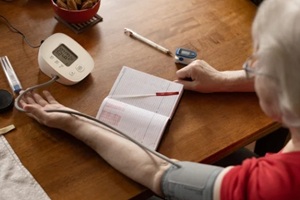 Intense or prolonged exercise can also temporarily lower systolic pressure. Your blood vessels widen during physical activity to deliver more oxygen to working muscles. That’s a healthy response, but it can leave your top number noticeably lower for a while afterward.
Prolonged standing triggers something called orthostatic hypotension. Blood pools in your lower legs when you stay upright for extended stretches, and your body may need a moment to adjust. An estimated, 5% of people experience this at age 50, and that figure rises past 30% among adults over 70. The National Heart, Lung, and Blood Institute notes that older adults face a higher risk for this type of drop, though it can happen at any age.
Certain medications are another factor worth considering. Blood pressure drugs, tricyclic antidepressants, medications for Parkinson’s disease, and even erectile dysfunction treatments can all bring systolic numbers down. If you started or changed a prescription around the time your readings shifted, that’s worth mentioning to your doctor.
Genetics matter too. Some people simply run lower blood pressure as a built-in trait. If your parents or siblings tend toward lower readings, your body likely follows the same pattern.
Temporary Dip Or Ongoing Pattern?
A one-time low reading after a long run, a skipped meal, or a hot shower usually doesn’t mean much. Your body adjusts quickly, and your numbers come back up.
An ongoing pattern is different. If your systolic pressure consistently falls below 90 mm Hg and you’re dealing with dizziness, blurred vision, fatigue, or fainting spells, your body may be flagging something that needs attention. These symptoms can sometimes trace back to treatable conditions, including thyroid imbalances, heart valve problems, or anemia, all of which a doctor can identify through straightforward testing. That’s where consistent blood pressure monitoring becomes especially useful, since isolated readings rarely tell the full story.
When To Talk To Your Doctor About Low Systolic Blood Pressure
If you feel fine and your numbers just happen to sit on the lower end, you probably don’t need treatment. Most providers won’t recommend changes unless symptoms are interfering with your daily life.
But schedule a visit if you notice recurring dizziness when standing, fainting episodes, ongoing fatigue that doesn’t improve with rest, or vision changes that come and go. Tracking your readings along with your symptoms and what you were doing at the time gives your provider something concrete to work with.
And if you ever experience signs of shock, including cold or clammy skin, rapid shallow breathing, or a weak pulse, call 911 immediately.
Monitor Your Low Systolic Blood Pressure At Imperial Center Family Medicine
 Knowing your baseline is the first step toward understanding what your low systolic blood pressure readings actually mean. Imperial Center Family Medicine’s experienced providers offer blood pressure management services personalized to your health profile.
With on-site Quest Diagnostics lab services, we can run same-day bloodwork to check for conditions such as anemia, thyroid issues, or markers of dehydration that might explain your numbers. And if something doesn’t feel right, we offer same-day appointments so you don’t have to wait for answers. Contact us today at 919-873-4437 or online to schedule your visit.